Summer fatigue… it’s a thing. And every year, I hear the same thing from you guys:
“Suzy, I don’t know what’s wrong with me.” or “I feel drained by noon.”
Or my favorite: I need coffee just to recover from making my coffee.😂
Most people blame the heat. And while extreme humidity and hotter temperatures can certainly wear you down, there are often other factors quietly working behind the scenes to make the weather affect you more.
Now, let’s talk about a few others that are more common. 
Believe It or Not, Some People Get the “Summer Blues”
One thing I’ve noticed over the years is that people who already have insomnia, chronic pain, anxiety, reflux, or nutrient deficiencies often tell me they feel dramatically worse during the summer. The heat doesn’t necessarily create the problem, it magnifies it. That’s why I encourage you to look for the underlying cause instead of assuming the weather is entirely to blame.
For me it was my parathyroid adenomas (hyperparathyroidism). I had those removed and I tolerate the heat better. Yeah that’s a thing! If you’re heat intolerant, get your PTH levels tested.
Most people have heard of Seasonal Affective Disorder (SAD) that occurs during the dark winter months. But did you know there’s an opposite version?
It’s medically termed “summer-pattern Seasonal Affective Disorder,” which we shorten to reverse SAD or summer SAD. It’s less common than winter SAD, but it’s a recognized medical condition.
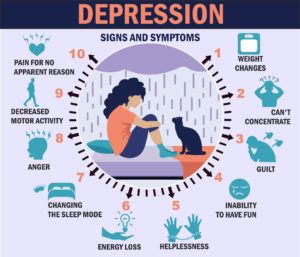
Instead of sleeping too much, craving carbohydrates, and gaining weight like many people do when they have the winter blues (SAD), summer SAD tends to look almost the opposite. People with this experience a lot of the following:
- insomnia or restless sleep
- irritability
- anxiety or feeling “keyed up”
- lower appetite
- loss of a few pounds
- fatigue despite more hours of sunlight
- difficulty concentrating (or brain fog)
- worsening depression
 Researchers are still trying to understand why it happens, but several theories make sense. Like one of them is that longer daylight hours interfere with normal circadian rhythm. And what does that do? It suppresses your melatonin production pushing it later into the evening… so making it harder for you to fall asleep on time. And once insomnia develops, energy production slows. Summer fatigue is more evident.
Heat may also play a role with reverse SAD. Some people simply don’t regulate body temperature efficiently, so they’re working harder just to stay cool. Thyroid disease will do that to you. So will iron deficiency! READ MORE about that. Throw in dehydration, electrolyte losses, disrupted routines, travel, and poor sleep, and it’s easy to see how fatigue can snowball.
Another theory involves serotonin, one of your brain’s important neurotransmitters. Sunlight boosts serotonin production, which is one reason most people describe feeling happier in the summer. Read this next, How Your Mental Health is Affected by Homocysteine, Serotonin and IL-8.
But like so many things in medicine, there isn’t a one-size-fits-all response. Genetics, medications, hormones, and individual biochemistry may explain why some people actually feel worse during the brightest months of the year.
I bet you’re wondering if vitamin D helps people with reverse SAD the way it does with the winter blues??? The answer is NO, not usually. However this is where it gets interesting.
Most people with summer SAD stay indoors in the summer because they don’t like the heat. So they may become vitamin D deficient, but it’s the egg, not the chicken. Follow? Researchers have not shown that vitamin D supplements treat the condition itself. Summer SAD appears to be driven more by heat, disrupted sleep, circadian rhythms, and brain chemistry moreso than by vitamin D levels. That said, if you avoid the sun all summer, it’s still worth getting a serum D level to check your baseline. If your vitamin D level is low and you need a supplement, mine is completely vegan –>
no sheep’s wool extract (lanolin). CLICK HERE.
If you “don’t like the heat” it could be as simple as that. But there could also be a legit biological reason you struggle during the hottest months. It could be reverse SAD, it could be one of the following reasons too.

You’re Losing More Minerals Than You Think
When you sweat, you don’t just lose water. You lose minerals too. I talked about this last week in my blog, 7 Sneaky Signs You May Be Low on Electrolytes (That Have Nothing to Do With Thirst).
Electrolytes such as sodium, potassium, and magnesium are needed to regulate muscle function, nerve signaling, hydration, blood pressure, and energy production. When they fall out of balance, you may feel tired, foggy, weak, dizzy, anxious, or even experience heart palpitations. Did you know acid blockers used for reflux and heartburn will steal some of these nutrients making you more susceptible to fatigue? True story.
I’ve met people who spent months trying to figure out why they felt terrible, only to discover they were simply running low on minerals because of a drug mugger. Type in your medication HERE and see what’s quietly being drained from you.
An electrolyte drink, mineral-rich foods, or a greens powder can almost always make a noticeable difference. That’s one reason I keep YUMMY GREENS handy during the summer months. I take a scoop every day, especially before workouts, or gardening, hiking… anything where I’m going to need an energy boost. Besides helping support alkalinity, it contains nutrient-dense superfoods that can help fill nutritional gaps when life gets busy.

Your Cells May Be Running Low on Energy Nutrients
Summer often means more activity. More walking. More gardening. More travel. More golf. More time with the kids and grandkids.
All of that requires energy.
B vitamins are a family (it’s not just one B like B6 you know). They’re involved in hundreds of biochemical reactions that help convert the meals you eat into usable fuel. Unfortunately, most of us don’t consume enough of them on a daily basis. Worse, about many medications can deplete them over time. Things like corticosteroids, oral contraceptives, acid blockers, blood pressure pills, diuretics and more.
If you’ve ever felt like your body is moving through mud despite getting adequate sleep, it may be worth considering whether your cells have the raw materials needed to produce energy efficiently. This will all get worse in the summer heat.
This is one reason I formulated MITO B COMPLEX, which provides activated forms of several key B vitamins that slip easily into your cells because they’re all body-ready. This formula is not like the kind you find in pharmacies where they’re precursor vitamins. Mito B is highly bioavailable and already activated.
Full disclosure: I take Mito B daily. And I also keep a few coconut-flavored Electrolit drinks in my refrigerator. I love these, and they help me restore electrolytes that work in tandem with the B vitamins to really crank me up in a way that coffee can’t. They’re one of my favorite grab-and-go ways to replenish electrolytes after a hot day, a workout, or a long flight.
Dehydration Doesn’t Always Feel Like Thirst
One of the biggest misconceptions about dehydration is that you’ll feel thirsty.
Sometimes you won’t. Instead, dehydration can show up as fatigue, headaches, constipation, poor concentration, irritability, dry skin, leg cramps, or feeling generally “off.”
As we get older, our thirst signals often become less reliable. Add air travel, alcohol, caffeine, exercise, summer heat and humidity, or certain medications, and dehydration can sneak up on you quickly. It can cause heat exhaustion if you’re not careful. Read this article next, 3 Devastating Effects of Heat Cramps, Heat Exhaustion and Heat Stroke.
A simple increase in fluids, along with adequate electrolytes (and/or B vites) can be surprisingly effective.
Your Vitamin D Might Be Lower Than Expected
People often assume that summer and all that sun-tanning automatically means optimal vitamin D levels.
Not necessarily. Many people are bats like me… we don’t come out in the daylight haha. We wait until it’s a little cooler, and we can’t get sunburnt.
Seriously, a lot of people avoid the sun, and spend most of their time indoors. Some who do go out use high-SPF sunscreen consistently. Others enjoy the sun, but have difficulty producing adequate vitamin D as they age, or do to genetic factors. 
Regardless, their vitamin D levels might be low. And I’m sure you know this but vitamin D plays a huge role in immune health, brain function, muscle health, and heart rhythm. When D drops, so does your mood and overall vitality.
If fatigue has become a recurring issue, it’s worth asking your practitioner to check your level. Don’t automatically supplement because D isn’t right for everyone. Make sure you need it with a simple lab test. While I’m thinking about it, please look at your bottle and make sure you’re taking the correct type of vitamin D. Here’s what I’m talking about: Study Warns Hidden Risks with Certain Types of Vitamin D.

Inflammation Is an Energy Thief
Another often-overlooked reason for summer fatigue is inflammation. Elevated homocysteine, ongoing joint pain, autoimmune conditions, poor sleep, excess body weight, gum disease, or even an inflammatory diet can all quietly drain your energy reserves.
When your body is constantly dealing with inflammation, it uses up a lot of energy. Whether the source is poor sleep, excess stress, joint discomfort, neuropathy, or chronic pain, inflammation in your body will quietly drain your energy reserves.
Inflammation is the equivalent of having 200 little browser tabs open in your body. Everything still works, but nothing works quite as efficiently.
Does Sleep matter?
The heat isn’t always the problem. It just magnifies an underlying vulnerability. One interesting STUDY found that people who slept well tolerated rising summer temperatures much better than poor sleepers. Those with poor sleep became significantly more fatigued as temperatures climbed, while good sleepers remained relatively unaffected. If you’re already struggling with insomnia or fragmented sleep, summer heat may simply magnify the problem.
The Bottom Line regarding Summer Fatigue
Sometimes exhaustion isn’t a sign that you’re getting older. And it’s not just the heat. Think of it, many people thrive in the heat, they love it, and they feel better. But for those who do not, it’s probably due to some underlying issue in the body. It could be your body’s way of trying to tell you something.
It may be asking for more hydration. That’s usually it for most people. It could also be asking for more minerals which serve as the electricity in your body. Maybe it wants you to get more sleep, or take care of some nagging pain or itch in the body that’s not being addressed. It could be you need additional B vitamins, this is often the case if you take prescribed medicine. Maybe it’s asking you to simply slow down and recover, and let go of the weight of the world which you’re carrying.
The good news is that even micro changes in your life often produce benefits.
If you’ve been blaming the summer heat for your horrible fatigue, take a closer look at everything else, especially if you used to do okay in the heat. The weather is a big deal, I hate the heat myself, but again, it may not be the whole story.
Related Articles
3 Surprising Ways Pickle Juice Solves Health Problems
The Morning Drinks that Quiet Inflammation (And the Ones that Stoke It)
Green Poop! 5 Possible Causes and What It Means
Dizzy, Foggy, or Off Balance? It Could Be a Vestibular Migraine (Even Without Head Pain)
When Leg Cramps Are Something More: 4 Signs They Could Be Related to Cancer




Suzy Cohen, RPh, has been a licensed pharmacist for over 30 years, blending conventional medicine with natural approaches to help people feel better and live healthier. She is the founder of Script Essentials, a supplement company known for targeted, custom-formulated products, some with patented innovations.
With a special focus on thyroid health, functional medicine, and drug-induced nutrient depletion (what she calls “drug muggers”), Suzy is the author of several books including Thyroid Healthy, Drug Muggers, and Diabetes Without Drugs. She also writes a nationally syndicated health column and shares practical, easy-to-understand guidance with readers around the world.