As a pharmacist, I’ve spent decades studying medications. I believe in modern medicine, both conventional and natural. Some drugs are absolutely life-saving, others are harmful.
But one of the most fascinating “treatments” I’ve ever learned about… isn’t a drug at all.
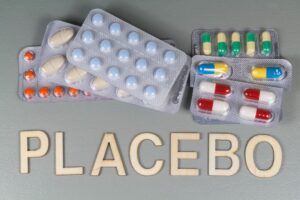
It’s the placebo effect.
And before you roll your eyes and think, Oh great, a sugar pill, stay with me because this is far more interesting than you may think.
The placebo effect is not fake healing. It’s not weakness. It’s not “all in your head” in the dismissive way people say that phrase. It’s your brain and body communicating in ways we still don’t fully understand. And seriously? The science behind it is really mind-blowing.
Fun fact: In some studies, people improved from a placebo even after being told, “This pill contains no medicine.” Scientists call this an “open-label placebo,” and yes… it still worked. Your brain is wild.
 Your Brain Has Its Own Pharmacy
Here’s the part that amazed me when I first learned it in pharmacy school:
When some people believe they’re receiving treatment, their brains begin producing real biochemical changes. Researchers have shown placebo responses can trigger the release of endorphins and dopamine, and even activate some of the same brain regions affected by pain medications. By the way, if you take pain medications you should read this article, Top 5 Medications Linked to Gastroparesis and How to Spot the Symptoms.
In other words, your brain sometimes responds to the expectation of healing.
That’s incredible.
Think about all the rituals involved in healthcare:
- the white coat
- the exam room
- the prescription pad
- the pill swallowed with water
- the reassuring words from a trusted practitioner
Your nervous system absorbs all of that. And your body responds. That doesn’t mean diseases are imaginary. It means human biology is more participatory than we once believed.
The Most Famous Placebo Studies Ever
The Fake Knee Surgery That Worked
One of the most famous placebo studies involved knee surgery. It was literally a sham surgery.
Researchers studied patients with severe osteoarthritis of the knee. Some received actual arthroscopic surgery. Others received “sham” surgery — meaning tiny incisions were made, but the procedure itself wasn’t actually performed.
Here’s the weird part! Many of the patients who received the fake surgery improved just as much as the people who had the real operation.
Wait… what?
These weren’t people with vague symptoms. These were patients struggling to walk, stand, and function comfortably. That STUDY shook up the medical community because it forced everyone to ask a difficult question: How much of healing comes from the procedure itself… and how much comes from the brain’s expectation of recovery?
If you have knee pain, here are 7 Natural Alternatives to Drugs to Relieve Joint Pain Fast
The Placebo Effect in Asthma
This one shocked researchers because patients felt better on placebo inhalers, but objective lung function tests showed little actual improvement. In other words, symptoms improved more than physiology. This STUDY became a famous example of how powerfully the brain can influence perception.
Parkinson’s https://www.michaeljfox.org/news/ask-md-placebo-and-parkinsons
Researchers discovered that Parkinson’s patients given placebo treatments actually released measurable dopamine in the brain — the very neurotransmitter involved in Parkinson’s disease. Brain scans confirmed it. If you want to read about it yourself, here’s the study title/link: Expectation and dopamine release: mechanism of the placebo effect in Parkinson’s disease
The “Expensive Placebo Works Better” Study
Researchers gave Parkinson’s patients placebo injections but told some patients the placebo was “expensive” and others it was “cheap.” The “expensive” placebo worked better. No lie!!! That STUDY is fantastic because it reveals how strongly perception and expectation shape outcomes.

Some Drugs Barely Beat Placebo
Now let me say this carefully because nuance matters and I don’t want to poke any big companies.
Antidepressants help many people. I’ve seen that firsthand. Some medications are absolutely appropriate and necessary.
But researchers have also discovered something uncomfortable:
In certain clinical trials — especially involving depression, pain, insomnia, and osteoarthritis — placebo responses can be surprisingly strong.
In fact, psychologist Irving Kirsch famously analyzed antidepressant trial data submitted to the FDA and concluded that a large percentage of improvement seen in some studies also occurred in the placebo groups.
That sparked enormous debate in medicine, and the debate still continues today.
But one thing is not controversial… the placebo response is real.
Hope matters.
Expectation matters.
Feeling cared for matters.
Even your doctor’s confidence matters.
The Nocebo Effect: Placebo’s Evil Twin
Now let’s talk about the darker side of all this. If positive expectations can help people feel better… negative expectations can make you feel worse.
This is called the nocebo effect.
I saw this constantly at the pharmacy. Someone would read the package insert like it was classified government intelligence. Or we’d casually say, “Take this with food in case it causes mild nausea,” and the next morning they’d call convinced their spleen was twitching, and their tongue had gone numb after hearing that side effect rattled off at warp speed during a TV drug ad.
I’m kidding… mostly.
Here’s the Twist Nobody Saw Coming
Researchers once assumed placebos only worked if patients were tricked.
Turns out… not always. In several studies, people knowingly took placebo pills labeled honestly as “placebo,” and some still improved. That completely overturned conventional thinking. Why would that happen? Researchers believe rituals themselves may matter:
- being cared for
- following a healing routine
- feeling hopeful
- calming the nervous system
- creating expectation
Human beings are not machines. We’re emotional, biochemical, electrical, hormonal creatures all at once. And healing is rarely just one thing. 
What This Means for Supplements
This is where the conversation gets interesting.
People sometimes say, “Oh, supplements are probably just placebo.” But I think that statement oversimplifies everything because medications are often derived from botanicals (and then morphed in a lab to create something synthetic and patentable). Plus, I’ve seen people sleep dramatically better after using gentle nutrient formulas with magnesium, amino acids, or herbs. I’ve seen people feel calmer, sharper, and more comfortable.
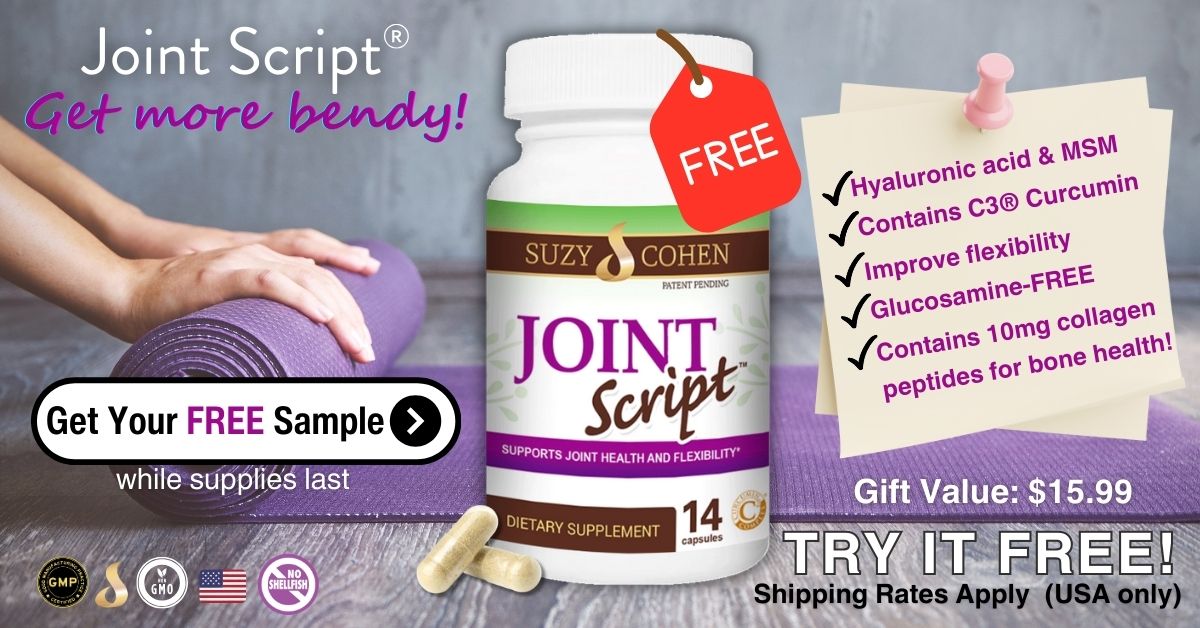
For example, many people over the years have written to me about how much they love Sleep Script or Joint Script.
Were those products funded with billion-dollar pharmaceutical trials? No.
But if someone sleeps through the night, wakes refreshed, or moves with less discomfort… the improvement is still real. And the placebo discussion shouldn’t insult anyone. If expectation, ritual, hope, nutrients, and nervous system calming all work together to help someone feel better… that’s still healing.
So What Should You Do With This Information?
Don’t stop your medications. Please don’t read this article and toss your prescriptions into the trash. Many medications are essential and life-saving. Besides, some medications need to be tapered carefully and should never be stopped abruptly without medical guidance.
But I do think patients should become more curious and informed. It’s healthy to ask thoughtful questions about the medications you take.
And I have to tell you, isn’t it interesting that many of us spend more time questioning the appetizer special at a restaurant than the prescription we’re about to take every day for the next 10 years? Ask questions like:
It’s relationship.
Expectation.
Belief.
Safety.
Nutrition.
Sleep.
Movement.
Connection.
And yes… sometimes a pill. Even though I tend to think ‘outside the pill’ I do believe there is a place for medications when they are prescribed appropriately.
The placebo effect reminds us that our body is not passive. Your brain is involved in every aspect of healing.
Your body is listening to what you believe.
So give it good information.
Related Articles
Expert Insights on Depression, Anxiety, Thyroid, Migraines and Celiac
The Truth About Ambien: Sleepwalking, Side Effects, and Safer Alternatives
Chronotherapy: Timing of These 7 Medication Matters Greatly!
MDMA for PTSD: Benefits, Risks, and Alternative Treatments
Tackling Unintended Weight Loss: 14 Ways to Manage Cachexia




Suzy Cohen, RPh, has been a licensed pharmacist for over 30 years, blending conventional medicine with natural approaches to help people feel better and live healthier. She is the founder of Script Essentials, a supplement company known for targeted, custom-formulated products, some with patented innovations.
With a special focus on thyroid health, functional medicine, and drug-induced nutrient depletion (what she calls “drug muggers”), Suzy is the author of several books including Thyroid Healthy, Drug Muggers, and Diabetes Without Drugs. She also writes a nationally syndicated health column and shares practical, easy-to-understand guidance with readers around the world.