Have you ever been told your blood work is “normal,” yet you still feel exhausted, foggy, or just not like yourself?
I see this situation more often than you might think. As a pharmacist, one of the most commonly overlooked nutrient problems I encounter is vitamin B12 deficiency, especially in people whose lab results technically fall within the so-called “normal” range.
The trouble is that laboratory reference ranges are wide. What’s considered normal on paper may not be optimal for your brain, nerves, or energy metabolism. In other words, you can have low-normal B12 levels and still experience symptoms.
Vitamin B12 plays a big role in red blood cell formation, nerve health, DNA synthesis, and methylation pathways that influence everything from mood to detoxification.
When levels drop (even a little bit) your body may begin sending signals that something isn’t quite right. Here are 7 signs that your body may be asking for more B12 support.
1. Persistent Fatigue
Vitamin B12 is essential for making healthy red blood cells, which carry oxygen throughout your body. When B12 levels are low, oxygen delivery to tissues becomes less efficient. The result is often fatigue that doesn’t improve with sleep.
You may experience it as a deep, dragging exhaustion rather than simple tiredness. You may wake up feeling unrefreshed or struggle to maintain energy throughout the day. Because fatigue is such a common symptom, B12 deficiency is often overlooked as a possible cause.
Some people also experience shortness of breath (SOB) during exertion or feel unusually weak during activities that used to be easy. SOB can be the result of many issues, read my article, Revealing 15 Hidden Causes of Shortness of Breath and How to Overcome Them.

2. Brain Fog or Memory Problems
Low B12 can affect the nervous system and may lead to brain fog, forgetfulness, or trouble concentrating.
Years ago, a friend called me about his wife. She had recently been admitted to a nursing facility with what doctors suspected might be early Alzheimer’s disease. Her memory was deteriorating, and she had become increasingly confused.
We talked about her symptoms, and I suggested something simple: Check her vitamin B12 levels. Why not? We had everything to gain, and nothing to lose by doing this simple affordable blood test.
Sure enough, we found out she was very deficient. The doctors discontinued several medications that she had been placed on for “dementia.” At the same time, they gave her both sublingual and injectable B12 vitamins. Within weeks, she was discharged home because her mind was clear and she felt well again. What a crazy thing, and it makes me wonder how many folks are admitted and treated for dementia when all it is is low B12.
Her husband still reminds me of that story with gratitude. It’s a powerful reminder that nutrient deficiencies can sometimes mimic neurological diseases.
3. Tingling or Numbness
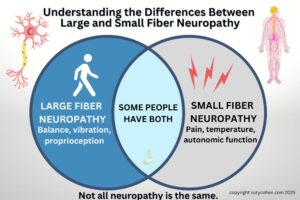
One of the more classic symptoms of low B12 is tingling or numbness in the hands and feet.
Vitamin B12 helps maintain the protective coating around nerves called myelin. Without adequate B12, nerves may not transmit signals properly.
People often describe sensations such as:
• pins and needles
• burning or tingling in the feet
• reduced sensation in the fingertips
If deficiency continues long enough, nerve damage can become more serious. That’s one reason early detection is important. B12 deficiency isn’t the only cause of neuropathy. Read my article on the ever-growing, often misdiagnosed SMALL FIBER NEUROPATHY.
4. Mood Changes or Anxiety
B vitamins play an important role in brain chemistry, especially vitamin B12, which helps keep your nervous system running smoothly. It doesn’t directly “make” neurotransmitters, but it’s essential for the methylation cycle, a process that helps regulate the production and balance of key brain chemicals like serotonin, dopamine, and norepinephrine.
(To learn more: Methylation Problems Lead to 100s of Terrible Diseases)
When B12 levels drop, this system can slow down. That’s when some people begin to notice subtle changes – low mood, irritability, anxiety, or even a kind of mental flatness that’s hard to describe but very real.
Low B12 can also lead to elevated homocysteine, a compound associated with inflammation and cognitive changes, which may further impact how your brain feels and functions.
This connection between B vitamins and mood is one reason a practitioner checks B12 levels in people with chronic depression, anxiety, brain fog, or unexplained fatigue – especially when symptoms don’t fully respond to other approaches.
On the topic of persistent depression, one more angle you can take is to try some thyroid hormone pills because those sometimes work better than antidepressants in many people. Read more in my article, Why Some Antidepressants Work and Some Don’t.

5. Dizziness or Balance Issues
Vitamin B12 is needed to make red blood cells, so when levels drop, the red blood cells get less efficient and larger (it’s called megaloblastic). What happens is oxygen delivery to your tissues (like your brain) drops! Even before anemia shows up on your labs, you can feel lightheaded or weak. Your brain is really sensitive to oxygen changes and unhealthy red blood cells contributes to dizziness, lightheadedness, or balance disturbances.
Some patients describe feeling slightly unsteady, especially when standing quickly or walking in dim lighting.
That’s not the only thing either. B12 is needed for maintaining healthy myelin, the protective coating around nerves. That’s why people with multiple sclerosis often take B12 shots. Anyway, when B12 levels drop, the autonomic nervous system (ANS) destabilizes. The ANS controls your blood pressure, heart rate and circulation when you stand up. So you might get what feels like POTS, or you might feel lightheaded when you stand up… it might also be described as a “floaty” feeling. A lot of people get that orthostatic sensation when they get up.
There are many reasons you might feel lightheaded, but B12 deficiency is one that’s easy to overlook. It’s not the most common symptom on its own, but it’s more likely when it shows up alongside other neurologic changes.
6. Pale Skin
Vitamin B12 deficiency can lead to a type of anemia called megaloblastic anemia, where red blood cells become larger but less efficient at carrying oxygen. As I mentioned earlier when discussing dizziness up above, this reduces oxygen delivery throughout your body and affects how you feel, and how you look.
When this happens, you may notice pale skin, sometimes with a subtle yellowish tint.
Pale skin is often mistakenly associated with iron deficiency, but they’re not the same. With iron deficiency, you produce less hemoglobin, so the blood carries less color, leading to that classic “washed out” appearance.
With B12 deficiency, the issue isn’t the color of your blood, but the quality and function of the red blood cells. That’s why the pallor can look slightly different, sometimes paler with a faint yellow tone rather than simply faded. And no, the yellow isn’t from jaundice.
With B12 deficiency, your body breaks down abnormal red blood cells more quickly, which can slightly raise bilirubin and give your skin a faint yellowish tint.

7. Digestive Changes
Vitamin B12 absorption depends on stomach acid and a protein called intrinsic factor.
Anything that interferes with stomach acid production (like PPI drugs or antacids), or gut infections may reduce your absorption and production of vitamin B12. This includes popular medications, digestive disorders, and aging.
Some people with B12 deficiency notice stomach problems like:
Reduced appetite: Low B12 can affect the digestive system and nervous system, sometimes leading to a decreased interest in food.
Mild nausea: B12 deficiency may disrupt normal gastrointestinal function, which can cause a vague sense of nausea or stomach discomfort.
Tongue soreness: A smooth, red, or sore tongue (called glossitis) can occur when rapidly dividing cells in the mouth are affected by low B12. You may be interested in my other article. Your Tongue Tells Your Story: 5 Steps to Address Unusual Changes.
Changes in taste: B12 deficiency can alter taste perception, sometimes making foods seem bland or different than usual.
If you have stomach problems or acid reflux here are two recommended articles:
5 Natural Remedies for Reflux and Esophagitis
How Your Gut Flora Contributes to Anxiety and 6 Corrective Steps
Drug Muggers That Deplete B12
One of the topics I write about often is Drug Muggers which are medications that quietly deplete important nutrients in the body. When you run out of these critical vitamins or minerals, you get symptoms, which the doctor will diagnose as a new disease. So understanding the concept is critical to your lifelong health and wellness.
Many common medications can interfere with B12 absorption or metabolism. The following categories of medications are the most profound drug muggers of B12 I can think of:
• Acid blockers and antacids
• Proton pump inhibitors like omeprazole
• Certain antibiotics
• Diabetes medications such as metformin
• Anticonvulsants
• Oral contraceptives and hormone therapies
• Cholesterol medications like cholestyramine
• Alcohol consumption

When these medications are taken for months or longer, B12 levels can gradually decline, often without obvious warning signs.
(You can look up your medications and the nutrients they may deplete at drugmuggers.com just type the name into the search box.)
The Role of Methylation and MTRR
Vitamin B12 also plays a critical role in methylation, the biochemical process that influences detoxification, gene expression, and neurotransmitter balance. Simply put, methylation helps your body “turn things on and off” at the cellular level… whether that’s making brain chemicals, clearing toxins, or repairing your DNA.
Some people carry variations in genes such as MTRR (methionine synthase reductase), which can affect how efficiently the body recycles and uses B12. In those cases, even if your intake looks good on paper, your body may not be using B12 as well as it should.
When methylation pathways are less efficient, people may require more support from high-quality biologically active forms of B vitamins to keep these processes running smoothly. For example, use methylcobalamin instead of cyanocobalamin. Or pyridoxal 5’ phosphate, not pyridoxine. 5-MTHF instead of folic acid. You can find these in my body-ready supplement Mito B Complex.
This methylation issue is one reason some people feel a lot better when they switch from basic, cheap B complex vitamins to more bioavailable, “body-ready” mitochondrial forms. If you already take someone’s brand of B vitamins, you may be interested in this: Why You Should Think Twice Before Buying B Complex Vitamins.
Why Taking B12 Alone Isn’t Always Ideal
When people suspect low B12, they often start taking high-dose B12 supplements.
That can help in the short term, but taking one B vitamin in isolation for long periods will create imbalances with other B vitamins. That’s because B vitamins work together. Think of them as one unit. When you take just B12, you’re splitting off one B vitamin from it’s bigger family. The rest of them become relatively deficient when you push a lot of B12 all by itself.
The B vitamins work together in metabolic pathways. For example:
• B1 and B2 help produce cellular energy
• B6 supports neurotransmitter production
• Folate works with B12 in methylation pathways
• Biotin supports metabolism
For that reason, many doctors should be suggesting a balanced B-complex formula rather than megadosing a single B vitamin. And if megadosing is done (like in the form of B12 shots), then you should not do those for a long time. You should also take an oral supplement that is well-rounded so you don’t become deficient in the other B vitamins of the family.
That’s why I formulated my Mito B Complex supplement to include multiple biologically active B vitamins together, including methylated folate and active forms of B12. 
Your Gut May Produce Some B Vitamins
Interestingly, beneficial bacteria in the gut can produce certain B vitamins, including small amounts of B12. A lot of people don’t know they make some B12 all on their own. But antibiotic use, digestive disorders, and an imbalanced microbiome may reduce that natural production.
Supporting healthy gut flora through diet and probiotics can indirectly support vitamin B12 production and absorption.
What the Research Shows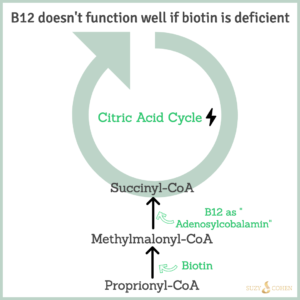
A study published in the American Journal of Clinical Nutrition found that neurological symptoms of B12 deficiency may appear even when blood levels fall within the lower end of the reference range.
Because of this, some doctors also measure markers such as methylmalonic acid (MMA) or homocysteine, which can reveal functional B12 deficiency earlier than standard tests. This is one reason some people feel bad even when their lab report is technically normal.
The reference range of B12 reflects population averages, not necessarily what’s optimal for your brain and nervous system. In other words, you can be “in range” and still be functionally low. For more on this massive problem, read my other article: 5 Ways the “Normal” Reference Range Can Still Miss the Problem
The Bottom Line
If you’re experiencing fatigue, brain fog, tingling, dizziness, subtle mood changes or unexplained neurological symptoms, don’t assume everything is fine just because your labs fall within the standard reference range. Vitamin B12 is essential for energy, nerve health, and brain function, yet deficiency is often missed because symptoms start well before labs fall out of range.
Don’t rely on a single “normal” lab, pay attention to how you feel and consider deeper testing when something doesn’t add up.
Sometimes the body whispers long before lab tests start shouting. And when it comes to B vitamins, balance matters.




Suzy Cohen, RPh, has been a licensed pharmacist for over 30 years, blending conventional medicine with natural approaches to help people feel better and live healthier. She is the founder of Script Essentials, a supplement company known for targeted, custom-formulated products, some with patented innovations.
With a special focus on thyroid health, functional medicine, and drug-induced nutrient depletion (what she calls “drug muggers”), Suzy is the author of several books including Thyroid Healthy, Drug Muggers, and Diabetes Without Drugs. She also writes a nationally syndicated health column and shares practical, easy-to-understand guidance with readers around the world.