You wake up at 3 a.m., heart pounding. Maybe you were being chased, your car was plunging off a cliff, or you were desperately trying to escape a raging wild boar. I’ve had one recently… I could hear his voice. I could feel that he was nearby. But no matter how hard I searched, I couldn’t find him. I woke up in tears, only to realize that my heartbreaking reality wasn’t just a nightmare. It is real.
Thankfully, most of the time when we have a nightmare, we wake up, realize we’re safe, and wonder, “Where on earth did THAT come from?”
Nightmares can be unsettling, especially when the same frightening scexnario plays out night after night. Where do these dreams come from? Why do they happen? Is there a medical explanation, or are our deepest fears finding a voice while we sleep?
Before we blame our imaginations or the emotional struggles we’re facing, let’s consider a few other possibilities. Our medications, supplements, sleep habits, and emotional health can all influence what happens after we close our eyes. Sometimes the explanation is surprisingly simple, and far less mysterious than the nightmare itself. 
For this article, I’m going to focus on the medications that can influence dreaming because most Americans take medicine for one thing or another. Some medications associated with nightmares are surprisingly popular. And while nutrient deficiencies aren’t established as direct causes of nightmares, certain drugs can affect nutrients involved in normal central nervous system function.
Let’s explore what the science says, what remains uncertain, and what we can do to get a more peaceful night’s sleep.
Why Do Nightmares Occur?
Most nightmares occur during REM (rapid eye movement) sleep, the stage most associated with vivid dreaming. REM periods generally get longer as the night progresses, which helps explain why we may wake from a bad dream around 3 or 4 a.m.
During REM sleep, brain regions involved in emotion are highly active, while our bodies enter a temporary state of muscle paralysis called REM atonia. Think of it as the brain’s built-in safety switch, preventing us from physically acting out our dreams.
Otherwise, we might dream a giant spider is crawling across our pillow and whack our husband over the head with a cast-iron skillet! Occasional nightmares are common. But when they become frequent, distressing, and interfere with our sleep or daily lives, healthcare professionals may diagnose something like a nightmare disorder.
Personally, I find it interesting that even our bad dreams have an official medical diagnosis! But for people who experience recurring nightmares, the distress is very real. And yes, there are treatments, including behavioral therapies and, in certain cases, prescription medications. Fortunately, medication isn’t always necessary, especially when we can identify and address an underlying trigger. 
The Medications That Trigger Nightmares
Our medicine cabinets are among the first places I’d investigate.
1. Beta-blockers
USED FOR: High blood pressure, irregular heart rhythms, angina, heart failure, migraine prevention, tremors, and sometimes anxiety symptoms.
Propranolol and metoprolol are prescribed for conditions including high blood pressure, certain heart problems, and migraine prevention. Some beta-blockers cross the blood-brain barrier more readily than others because they’re fat-soluble, and guess what? Our brains are pretty fatty, too! These popular medications have been associated with vivid dreams and nightmares.
Another possible cause of beta-blocker-induced dreaming is that these medications can suppress nighttime melatonin production. Keep in mind, melatonin helps regulate our sleep-wake cycle, so we need some of it! That said, reduced melatonin doesn’t explain every nightmare.
More water-soluble beta-blockers, such as atenolol, generally enter the brain less readily. That doesn’t guarantee they’ll be free of sleep-related side effects, but if nightmares started after beginning a beta-blocker, it may be worth discussing alternatives with our prescriber. Just don’t stop a beta-blocker abruptly. 
2. Montelukast (Singulair)
USED FOR: Asthma prevention, exercise-induced bronchoconstriction, and seasonal or year-round allergies.
This one deserves special attention! In 2020, the FDA required its strongest safety warning, called a boxed warning, because montelukast has been linked to serious mental health side effects. No joke! Things like disturbing dreams and nightmares, mood changes, anxiety, depression, and even suicidal thoughts or actions. And it’s not just adults. The FDA says these adverse reactions may happen in children, too, which is especially concerning when a child suddenly starts having frightening dreams or unusual behavioral changes.
The FDA advises us to stop taking montelukast and contact a healthcare professional immediately if new mood or behavioral symptoms develop. And here’s something worth knowing: The FDA recommends reserving montelukast for allergic rhinitis when other allergy medications haven’t worked well enough or can’t be tolerated… meaning it’s not the first choice for ordinary hay fever.
3. Antidepressants
USED FOR: Depression, anxiety disorders, panic attacks, OCD, PTSD, and sometimes chronic pain or insomnia.
Antidepressants can do some interesting things to our dreams! SSRIs like sertraline (Zoloft) and fluoxetine (Prozac), SNRIs like venlafaxine (Effexor), and medications like mirtazapine (Remeron) and bupropion (Wellbutrin) can affect REM sleep and dream activity. Some of us may experience unusually vivid dreams or nightmares, while others notice strange dreams after reducing a dose or stopping treatment. And here’s the tricky part: The same medication that gives one person nightmares might actually improve sleep for someone else!
Our brains don’t all respond the same way. If nightmares begin after a medication change, it’s worth discussing with our prescriber rather than stopping an antidepressant abruptly.
4. Alzheimer’s Medications
USED FOR: Managing symptoms of Alzheimer’s disease and certain other forms of dementia, including memory and thinking difficulties.

Donepezil (Aricept) deserves a mention here, especially when it’s taken at bedtime! This medication increases the availability of acetylcholine, a brain chemical involved in memory, learning, and REM sleep. That’s part of how it works. But here’s the interesting part: Acetylcholine is also involved in dreaming, so boosting its activity can sometimes make a person’s dreams unusually vivid, bizarre, or downright frightening. Some people even report nightmares that feel frighteningly real!
If this happens, there’s a relatively simple fix worth discussing with our prescriber: Moving donepezil from bedtime to morning. That timing change may reduce nightmares without having to discontinue the medication. Just check with the prescriber before changing the schedule.
5. Parkinson’s Medications
USED FOR: Parkinson’s disease, movement difficulties, tremors, muscle stiffness, and sometimes restless legs syndrome.
Medications like levodopa (Sinemet) and dopamine agonists such as pramipexole (Mirapex) and ropinirole (Requip) help improve movement by increasing dopamine activity in our brains. But here’s the catch! Dopamine doesn’t just help us move. It also plays a role in sleep, dreaming, and how our brains process emotions. So when we start tinkering with dopamine levels, our dreams can sometimes get a little wild!
Some people experience unusually vivid dreams, nightmares, or even hallucinations. And to complicate matters, Parkinson’s disease itself can disrupt sleep and cause REM sleep behavior disorder, where our normal protective muscle paralysis doesn’t work properly. That means some people may actually shout, kick, punch, or physically act out their dreams.
If frightening dreams begin after starting one of these medications or changing the dose, it’s worth discussing with our neurologist. Sometimes adjusting the medication or its timing can help, but we shouldn’t make those changes on our own.
6. Sleep Medications (Sleeping Pills)
USED FOR: Short-term treatment of insomnia, including trouble falling asleep or staying asleep.
You’d think a sleeping pill would give us peaceful, uninterrupted sleep, right? Well, not always! Zolpidem (Ambien) is one of the best-known examples. It helps us fall asleep by enhancing the effects of GABA, a calming neurotransmitter in our brains. But here’s the strange part. Some people experience vivid dreams or nightmares, and zolpidem can occasionally trigger something even more concerning: complex sleep behaviors. We’re talking about sleepwalking, eating, making phone calls, or even driving while not fully awake, often with no memory of it the next morning!
In fact, the FDA requires a boxed warning for zolpidem and certain related sleeping pills because these behaviors have sometimes resulted in serious injuries or death.
If we experience one of these complex sleep behaviors, the FDA advises stopping the medication immediately and contacting our prescriber. These medications should not be taken again after such an episode. You may be interested in this article next, The Truth About Ambien: Sleepwalking, Side Effects, and Safer Alternatives.
7. Opioid Pain Medications
USED FOR: Moderate to severe pain, including pain following surgery, serious injuries, cancer-related pain, and certain chronic pain conditions.
You’d think that taking a strong painkiller would help us sleep like a baby, right? Not necessarily! Opioids such as oxycodone (OxyContin, Roxicodone), hydrocodone (Norco), morphine, and codeine can actually interfere with our normal sleep cycles.
These medications act on opioid receptors in our brains, helping reduce pain but also changing our sleep architecture. They can suppress REM sleep, disrupt deep sleep, and leave us with less restorative rest. Some people also report unusually vivid or disturbing dreams. And here’s something else worth knowing: Opioids can suppress our breathing during sleep. They may contribute to central sleep apnea, where the brain temporarily fails to send the proper signals to breathe, and can worsen existing sleep-disordered breathing.
So if we’re taking an opioid and suddenly experiencing nightmares, restless sleep, morning headaches, or unusual daytime fatigue, it’s worth having a conversation with our prescriber. Sometimes the problem isn’t just what we’re dreaming about. It’s what’s happening to our breathing while we’re asleep!
We shouldn’t abruptly stop long-term opioid therapy or change the dose without medical guidance.

8. Antihistamines (Allergy Medications)
USED FOR: Allergies, itching, hives, motion sickness, nausea, and sometimes insomnia.
Here’s an ironic one! Older antihistamines such as diphenhydramine (Benadryl), doxylamine (Unisom), and hydroxyzine (Vistaril) make many of us drowsy. But sleepy doesn’t always mean we’re sleeping well. Their anticholinergic effects can interfere with normal brain signaling, and some people report unusual dreams, although the evidence for antihistamines directly causing nightmares is limited.
Newer choices such as loratadine (Claritin) and fexofenadine (Allegra) generally enter the brain less readily. And especially as we get older, it’s worth remembering that the older antihistamines can cause next-day grogginess, confusion, and other unwanted effects. Other medications worth reviewing include:
- Smoking cessation medications: Varenicline (Chantix) and nicotine patches, especially patches worn overnight. Nicotine can influence our sleep and dream activity, so those nighttime patches may be worth a closer look!
– Corticosteroids: Prednisone and methylprednisolone can sometimes cause insomnia, mood changes, and unusually vivid or disturbing dreams, especially at higher doses.
– Amantadine: Used for Parkinson’s disease and certain movement problems, this medication can sometimes cause insomnia, vivid dreams, or hallucinations.
– Certain antibiotics: Fluoroquinolones such as ciprofloxacin (Cipro) and levofloxacin (Levaquin) have been associated with neuropsychiatric side effects, including nightmares and other sleep disturbances.
– Antimalarial medications: Mefloquine (Lariam) is particularly noteworthy because it can cause abnormal dreams, nightmares, anxiety, and other serious neurological or psychiatric reactions.
– ADHD stimulants: Medications such as amphetamine (Adderall) and methylphenidate (Ritalin) can interfere with sleep, especially when taken too late in the day. Sometimes it’s the disrupted sleep, rather than a direct effect on dreaming, that contributes to the problem.
One important distinction: Not every vivid dream is a nightmare, and not everyone taking these medications will experience sleep disturbances. Sometimes the medication is the culprit, sometimes it’s the underlying condition, and sometimes it’s a combination of both. That’s why it’s worth looking at the whole picture before blaming one little pill!

Withdrawal Can Also Change Your Dreams
Stopping certain substances can temporarily change REM sleep and dream intensity. This is especially well recognized with alcohol and cannabis. Discontinuation of some antidepressants or sedatives can also produce unusual dreams and sleep disturbances.
Please don’t abruptly stop a prescription medication to test this theory. Alcohol and benzodiazepine withdrawal can be dangerous, and some medications require careful tapering.
Instead, speak with your pharmacist or prescriber about the timing, dosage, and possible alternatives.
Supplements That May Intensify Dreams
Natural doesn’t automatically mean gentle, especially when it comes to sleep.
Vitamin B6: This one fascinates me. A small 2002 study reported greater dream salience after participants took 250 mg of vitamin B6. A larger 2018 randomized study involving 100 participants found that 240 mg of B6 increased the amount of dream content recalled, but did not significantly increase dream vividness, bizarreness, or color.
In other words, B6 may help you *remember* more of your dreams rather than necessarily causing more dreams or nightmares.
These are unusually high doses, not doses I’d recommend experimenting with. Long-term excessive B6 intake can cause peripheral neuropathy, which may produce tingling, numbness, and nerve damage.
If you take a B-complex before bed and notice disturbing dreams, consider discussing a change to morning dosing.
Melatonin: Some people report vivid dreams or nightmares while taking melatonin, although controlled evidence that it causes nightmares is limited. Higher doses aren’t necessarily better.
5-HTP and L-tryptophan: These influence pathways involved in serotonin production. Claims about their ability to intensify dreams are not well established. Both also warrant caution when combined with serotonergic medications because of potential interactions.
Huperzine A and alpha-GPC: These influence acetylcholine-related pathways involved in memory and REM sleep. Evidence that they reliably cause nightmares in people is insufficient.
Dream herbs: Mugwort and Calea zacatechichi are sometimes promoted for vivid or lucid dreams, but human research is limited and safety concerns remain. Finally, don’t overlook caffeine, stimulating pre-workout powders, and nootropics. Even if they don’t directly cause nightmares, they can interfere with sleep quality.

Drug Muggers: Could Nutrient Depletion Be Involved?
Here’s where my pharmacist brain goes to work. Certain medications can reduce levels of vitamins or minerals needed for normal nervous-system function. I call these medications *Drug Muggers* because they can interfere with nutrient absorption, metabolism, or availability. But let’s make an important distinction: a drug-induced nutrient deficiency is not the same thing as a proven cause of nightmares. Here are several medication–nutrient relationships worth knowing:
Magnesium: Long-term proton pump inhibitor use can cause low magnesium in some people. Certain diuretics also increase urinary magnesium losses.
Vitamin B6: Isoniazid can interfere with vitamin B6 metabolism, which is why pyridoxine supplementation is recommended for certain patients taking this tuberculosis medication.
Folate and B vitamins: Some medications can affect B-vitamin status. Oral contraceptives have been associated with changes in certain nutrient measurements, although clinically meaningful deficiencies aren’t inevitable.
Iron: Low iron stores can contribute to restless legs syndrome, which disrupts sleep. Fragmented sleep may increase dream recall, although this does not establish iron deficiency as a direct cause of nightmares.
If you take medications associated with nutrient depletion, ask your healthcare provider whether your symptoms or medical history justify testing. I don’t recommend taking large doses of supplements simply because you’ve started having bad dreams. More isn’t always better, and sometimes it creates an entirely new problem.
Stress, Grief, Hormones, and Other Hidden Triggers
Not every nightmare begins in our medicine cabinets.
Stress and anxiety: Emotional stress is strongly associated with disturbing dreams. When our minds are overwhelmed during the day, nighttime can feel equally unsettled.
Grief: Losing someone we love can profoundly change our sleep. Dreams may involve memories, reunions, fear, or painful reminders of the loss. Some are comforting. Others are deeply upsetting. There is no single correct way to dream while grieving. If those dreams become overwhelming or make you afraid to sleep, professional support may help.
Trauma and PTSD: Trauma-related nightmares may replay an event or reflect its emotional themes. These nightmares deserve appropriate treatment, not simply advice to relax.
Sleep deprivation and insomnia: Poor sleep can alter REM patterns and make distressing dreams more noticeable. Sleep apnea can also fragment sleep and deserves evaluation when symptoms such as snoring, gasping, or daytime sleepiness are present.
Blood sugar: Nocturnal hypoglycemia can cause sweating, palpitations, and disturbed sleep. This is particularly important for people taking insulin or medications such as sulfonylureas. A light dinner alone doesn’t establish that low blood sugar caused a nightmare.
Alcohol: Alcohol may initially make you sleepy but often disrupts sleep later in the night. Changes in REM sleep can contribute to vivid dreaming, particularly as alcohol wears off or during withdrawal. 
Hormonal changes: Pregnancy, perimenopause, and menopause can change sleep quality. Night sweats, insomnia, and repeated awakenings may make dreams easier to remember.
Nightmares, Night Terrors, or Acting Out Dreams?
These three experiences may look similar, but they’re quite different. Nightmares are frightening dreams that usually occur during REM sleep. You generally awaken fully and can remember what frightened you.
Night terrors, also called sleep terrors, typically arise from deep non-REM sleep. A person may scream, appear terrified, sweat, or move around while remaining partly asleep. They often remember little or nothing afterward. Night terrors are more common in children.
REM sleep behavior disorder (RBD) involves physically acting out dreams. Someone may shout, punch, kick, or leap from bed because the normal muscle paralysis of REM sleep is impaired.
RBD deserves medical evaluation because it can cause injuries and, in some people, is associated with neurological conditions such as Parkinson’s disease and Lewy body dementia.
One episode of tossing or shouting doesn’t automatically mean we have RBD. But repeated dream-enacting behavior should be discussed with a sleep specialist.
Can Frequent Nightmares Predict Dementia?
This is an intriguing area of research, but I want to put the findings in perspective. A 2022 study published in *eClinicalMedicine* examined distressing dreams and later cognitive outcomes in middle-aged and older adults.
Participants reporting weekly distressing dreams had higher odds of subsequent cognitive decline or dementia than those reporting none. Interestingly, the associations were statistically significant in men but not women when researchers analyzed the sexes separately. However, this was observational research. It cannot establish that nightmares cause dementia, and the estimates have important limitations. Having nightmares does not mean we’re developing dementia.
Still, new or worsening nightmares accompanied by changes in memory, movement, or physical dream-enacting behavior are worth discussing with a physician. Think of sleep symptoms as useful information, not a prediction of our future.
Your Nightmare Detective Checklist
Before assuming your nightmares are random, spend a few minutes investigating what changed. Ask yourself these six questions:
– New medication? Did the nightmares begin after starting a prescription, changing the dose, or changing when you take it?
– New supplement? Have you added melatonin, vitamin B6, a B-complex, an herbal formula, or a sleep product?
– More stress or grief? Has something emotionally difficult happened recently?
– Changes in caffeine or alcohol? Are you drinking coffee later, using stimulants, or changing your alcohol intake?
– Disrupted sleep? Are you sleeping fewer hours, snoring, waking frequently, or struggling with insomnia?
– Changes in hormones or health? Have night sweats, menopause symptoms, diabetes treatments, or another health issue affected your sleep?
Here’s a practical tip: keep a simple sleep diary for two weeks. Record bedtime, medications, supplements, caffeine, alcohol, stressful events, awakenings, and nightmares. You may discover a pattern worth discussing with your healthcare provider. Just remember that a pattern doesn’t automatically prove cause and effect. 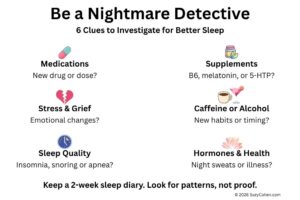
What Actually Helps Reduce Nightmares?
Imagery Rehearsal Therapy (IRT): This is one of the best-supported treatments for recurrent nightmares. The American Academy of Sleep Medicine recommends it for nightmare disorder and PTSD-associated nightmares. The technique involves choosing a nightmare, rewriting the story with a less frightening or more empowering outcome, and mentally rehearsing that revised version while awake. Think of it as editing the screenplay before your brain runs the movie again. A therapist trained in IRT can help, particularly when nightmares are trauma-related.
Prazosin: This prescription blood pressure medication is sometimes used for PTSD-associated nightmares. The 2023 VA/DoD guideline suggests it for that specific purpose, although the recommendation is conditional and the overall research findings are mixed. Prazosin can cause dizziness, low blood pressure, and fainting, especially when starting treatment or increasing the dose. It should be considered with a knowledgeable prescriber. If you take prazosin on a daily basis, you can look up the drug-nutrient depletions on my other website, drugmuggers.com.
Melatonin and glycine: Melatonin has been investigated for certain sleep problems, including sleep disruption associated with beta-blockers. However, it has not been established as a treatment for nightmares caused by those medications. Small studies suggest that glycine, an amino acid, may improve some measures of subjective sleep quality. Research has not demonstrated that glycine specifically treats nightmares. Neither supplement should be presented as a proven nightmare remedy.
Simple sleep habits: Sometimes the most useful changes are surprisingly ordinary.
– Keep your bedroom cool, dark, and quiet.
– Maintain a consistent sleep and wake schedule.
– Avoid caffeine late in the day. Here are 6 reasons CAFFIENE helps with attention span and ADHD.
– Limit alcohol close to bedtime.
-Try changing your blanket or covering yourself more often. Here are 3 reasons you sleep better covered with a BLANKET!
– Discuss moving stimulating supplements to earlier in the day.
– Try a relaxing bedtime routine, such as a warm bath, gentle stretching, or quiet reading.
– Skip the scary movies and true-crime podcasts right before bed. Your imagination doesn’t need extra material!
Could Magnesium Help Us Sleep Better?
Magnesium is involved in hundreds of biochemical reactions, including those that support normal nervous system function. Some studies suggest that magnesium supplementation may help certain people with sleep difficulties, although the research is mixed.
I formulated MagFocus with magnesium L-threonate, a form of magnesium that has attracted research interest for its effects on the brain. But let’s be clear: We don’t have convincing clinical evidence that magnesium supplements prevent nightmares. So while magnesium might help some of us get better shut-eye, I can’t promise it will keep that giant spider off our pillow! If we’re struggling with disturbing dreams, it’s worth reviewing our medications, supplements, stress levels, and sleep habits before reaching for another pill. After all, sometimes the most useful clue isn’t a new pill. It’s a medication or habit we’re already living with.
When Should You See a Doctor?
Please seek medical advice if nightmares are frequent, interfere with your daytime functioning, or make you afraid to sleep.
It’s especially important to get evaluated if they begin after a medication change, follow a traumatic experience, or involve shouting, kicking, punching, or falling out of bed. If you’re experiencing thoughts of self-harm, seek immediate support. In the United States, you can call or text 988.
The Bottom Line
Nightmares aren’t always mysterious, and they aren’t necessarily signs of something serious. Sometimes they coincide with a new medication, a supplement, fragmented sleep, hormonal changes, or a difficult season of life. The important thing is to look for patterns without jumping to conclusions.
As a pharmacist, I encourage us to review medications and supplements before reaching for another sleep remedy. A thoughtful conversation with your healthcare provider may uncover something useful. And remember, you don’t have to resign yourself to frightening dreams. Effective treatments exist, and peaceful sleep is a worthwhile goal.
Related Articles
12 Amazing Facts About Nightmares and Dreaming
Drugs That Might Cause Nightmares or Bad Dreams
Treating Alzheimer’s Disease: 3 Pharmaceuticals and 3 Natural Options
mTOT Drugs May Help Parkinson’s, Lewy Body and other Dementias
The Hidden Role of Cortisol: Why You’re Still Tired After 8 Hours of Sleep
4 Ways to Navigate Sleep Challenges: Melatonin’s Role in Thyroid Health

Suzy Cohen, RPh, has been a licensed pharmacist for over 30 years, blending conventional medicine with natural approaches to help people feel better and live healthier. She is the founder of Script Essentials, a supplement company known for targeted, custom-formulated products, some with patented innovations.
With a special focus on thyroid health, functional medicine, and drug-induced nutrient depletion (what she calls “drug muggers”), Suzy is the author of several books including Thyroid Healthy, Drug Muggers, and Diabetes Without Drugs. She also writes a nationally syndicated health column and shares practical, easy-to-understand guidance with readers around the world.