You have a glycocalyx.
If you’re wondering whether that’s a Greek island, a dinosaur, or a new prescription drug, don’t worry.
It’s actually a remarkable microscopic lining that coats the inside of your blood vessels. Scientists call it the glycocalyx, but I think of it as the microscopic grass inside your arteries.
When it’s healthy, it helps protect your blood vessels, regulate blood flow, and keep inflammation in check. When it becomes damaged, trouble tends to follow. One of the biggest threats to this delicate protective layer is something millions of Americans struggle with every day: poor blood sugar control.
Have you noticed you’re getting sleepy after meals?
Maybe you’ve developed a few stubborn pounds around your middle. Perhaps you’re hungry again an hour after eating, or your doctor casually mentioned that your blood sugar is “a little high.”
That’s often how blood sugar problems begin, not with a diagnosis, but with subtle clues that your metabolism is struggling.
During my years behind the pharmacy counter, I noticed something interesting. People usually worried about their cholesterol, but very few paid attention when fasting glucose crept from 90 to 100, then 105, then 110. Yet those small changes are often your body’s early warning system.
The good news? That’s also when lifestyle changes and targeted nutritional support can make the biggest difference.

The Blood Sugar Gray Zone
According to the CDC, nearly 98 million American adults have prediabetes, and most don’t know it. That’s what I call the blood sugar gray zone. You don’t have diabetes. You’re not sick. But your body is quietly waving a yellow flag. Maybe you’re dealing with fatigue after meals, increased cravings for sweets, brain fog, rising triglycerides, difficulty losing weight, or a slightly elevated A1c. This is often where insulin resistance begins.
You may be interested in how sweeteners react in your body, and which is the best. If you have a moment, read my article, The Pros and Cons of 3 Natural Sweeteners: Honey, Agave, and Maple Syrup.
The Blood Sugar Gray Zone
According to the CDC, nearly 98 million American adults have prediabetes, and most don’t know it. That’s what I call the blood sugar gray zone.
You don’t have diabetes. You’re not sick. But your body is waving a yellow flag. Maybe you’re dealing with:
- Fatigue after meals
- Increased cravings for sweets
- Brain fog
- Difficulty losing weight
- Rising triglycerides
- Mild kidney problems
- Long-standing obesity
- A slightly elevated A1c or fasting glucose
This is where insulin resistance begins. Think of insulin as a messenger carrying glucose to your cells. In a healthy body, the message gets through. With insulin resistance, it’s like texting a teenager—you know the message was delivered, but nobody is responding.
Your pancreas tries to compensate by producing more insulin, but eventually blood sugar lingers in the bloodstream longer than it should. That’s insulin resistance, and it’s one of the earliest metabolic warning signs. 
Your Blood Sugar Affects More Than Your Glucose Meter
Most people think blood sugar is only about diabetes.
It’s not.
Blood sugar affects energy, cravings, belly fat, inflammation, brain function, and something you’ve probably never heard of before: the glycocalyx.
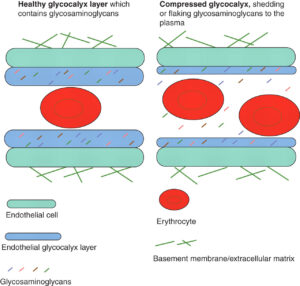
The glycocalyx (pronounced gly-co-CAY-lix) is a delicate, microscopic coating that lines the inside of your blood vessels.
I think of it as a lush lawn growing along the inside of your arteries.
When it’s healthy, it helps regulate blood flow, protects artery walls, reduces inflammation, and keeps unwanted particles from sticking where they don’t belong.
Researchers have been studying the glycocalyx for decades, and educators such as Dr. David Diamond have helped bring attention to the connection between blood sugar, vascular health, and this remarkable protective lining. One of the scientists who has spent years studying it is Dutch researcher Hans Vink, whose work has helped shine a light on this fascinating structure.
Anyway, when these tiny “hairs” become flattened or damaged, trouble tends to follow. Researchers now believe glycocalyx injury may be one of the earliest signs of vascular dysfunction associated with insulin resistance and metabolic disease.
In other words, healthy blood sugar isn’t just about avoiding diabetes someday. It’s about protecting your arteries today. Want to know where your diabetes off switch is? FIND OUT HERE.
Six Things That Flatten Your Glycocalyx
If you’re wondering why this microscopic “grass” matters so much, it’s because the glycocalyx is surprisingly fragile.
Researchers have identified several factors that can damage, thin, or flatten this protective lining.
1. High Blood Sugar
Elevated glucose is one of the biggest threats to the glycocalyx. Excess sugar promotes oxidative stress and inflammation, which can gradually damage this delicate protective layer.
2. Insulin Resistance
Insulin resistance creates metabolic stress throughout the body. It doesn’t just affect blood sugar—it promotes inflammation and vascular dysfunction that may compromise glycocalyx integrity.
3. High Blood Pressure
Blood vessels are designed to handle normal blood flow. Persistently elevated pressure places extra strain on artery walls and may gradually wear down the glycocalyx. The authors of this 2018 study published in the Journal of Clinical Hypertension concluded, “Endothelial glycocalyx is impaired in untreated hypertensives and is related to arterial stiffness, coronary, and myocardial dysfunction.”
4. Smoking
Cigarette smoke exposes blood vessels to a constant barrage of oxidative stress. Not surprisingly, smokers tend to have more damage to both the glycocalyx and the endothelial cells beneath it.
5. High Triglycerides
High triglycerides rarely travel alone. They’re often part of the same metabolic traffic jam that includes insulin resistance, inflammation, and poor vascular health.
6. Chronic Inflammation
Whether it’s driven by poor diet, chronic stress, obesity, illness, or lack of sleep, inflammation is one of the glycocalyx’s biggest enemies.
The encouraging news is that many of these factors are modifiable.
So if these things flatten the glycocalyx, what helps fluff it back up?
Six Things That Help Your Glycocalyx Recover
Can the glycocalyx recover?
The encouraging answer is yes—at least to some degree. Researchers now believe the glycocalyx is a dynamic, living structure that can repair itself when conditions improve.
Think of it like a lawn. Drive a truck across it every day and the grass eventually disappears. Stop the damage, add water and sunshine, and new growth can occur. Here are six ways to support a healthier glycocalyx.
1. Keep Blood Sugar Steady
This may be the single most important step. Stable blood sugar helps create an environment where the glycocalyx can recover and thrive. Need help with that? Find out Why Your Blood Sugar Numbers Don’t Matter Much (and what does!)

2. Eat More Colorful Plants
Berries, leafy greens, herbs, pomegranates, grapes, and other colorful plants provide polyphenols that help combat oxidative stress and support vascular health.
3. Get Enough Vitamin C
Vitamin C helps protect blood vessels from oxidative stress and supports the endothelial cells that sit beneath the glycocalyx. It’s one more reason to eat plenty of colorful fruits and vegetables. Interested in a 100% natural vitamin C made from acerola cherries and citrus fruits? TRY MY Vitamin C with DHQ —> (You may not know this but most “C” formuas are synthetized).
4. Move Your Body Daily
Exercise improves blood flow and stimulates nitric oxide production, helping blood vessels stay flexible and healthy.
5. Prioritize Sleep
Poor sleep increases inflammation and insulin resistance. One of the simplest ways to support your glycocalyx may be getting seven to eight hours of restorative sleep. Hey, do you sleep with a blanket or not? Here are 3 Reasons You Sleep Better Covered with a Blanket – Even When It’s Hot
6. Embrace Healthy Fats
Omega-3 fats from fish, walnuts, flax, and fish oil help calm inflammation and support healthy blood vessels. Many of the same habits that improve blood sugar, reduce inflammation, and protect your heart are the very same habits that help your glycocalyx thrive.

Three Ingredients With Impressive Research Behind Them
If you’ve been reading my work for a while, you know I’m always looking for ingredients that work through multiple pathways, not just one. When it comes to blood sugar support, three ingredients consistently stand out to me:
- Berberine
- Gymnema sylvestre
- ABA-standardized fig fruit extract
Each works through different mechanisms, which is one reason I find them so intriguing.
Berberine: The Metabolic Multitasker
Berberine is often called “nature’s metformin,” though I think that’s an oversimplification because it does several things at once.
In plain English, berberine helps your cells hear insulin’s message more clearly. It supports healthy glucose uptake, encourages efficient energy metabolism, and may reduce excess glucose production by the liver. I also like the fact that berberine appears to support a healthier gut microbiome, which is increasingly linked to metabolic health.
Did you know berberine helps with memory and certain brain conditions? Read this ARTICLE next.
Gymnema Sylvestre: The Sugar Destroyer
Gymnema’s nickname in Hindi is gurmar, which literally means “sugar destroyer.” People who chew Gymnema leaves often report that sweet foods suddenly taste bland. Imagine taking a bite of chocolate and tasting… almost nothing. That’s either fascinating or tragic, depending on your relationship with chocolate.
Beyond the taste buds, Gymnema may support healthy glucose absorption and pancreatic function, making it particularly interesting for people concerned about blood sugar balance.

Fig Fruit Extract: The Most Surprising Ingredient
This is the ingredient that surprises people most.
Figs? For blood sugar support?
Yes. The key compound is abscisic acid (ABA), a plant compound that appears to help cells absorb glucose more efficiently. Interestingly, your body naturally produces small amounts of ABA after eating carbohydrates, suggesting it may be part of your body’s own glucose-regulating system.
Several studies have shown that ABA-standardized fig fruit extract may help support healthier post-meal glucose and insulin responses.
Why I Like These Three Together😊
What makes berberine, Gymnema, and ABA-standardized fig fruit extract so interesting is that they work through different pathways.
Berberine supports insulin sensitivity.
Gymnema supports healthy carbohydrate handling.
ABA supports glucose uptake into tissues. I put a lot of ABA Life’s brand of standardized fig extract into my GlucoScript MAX. I think that’s why it works so great, and it’s what sets this formula apart from other blood sugar formulas. Don’t take my word for it if you’re skeptical about figs and blood sugar, you can read about ABALife fig extract HERE and see for yourself what it does for insulin sensitivity.
Together, they provide a broader approach than relying on a single ingredient. 
In fact, the research on these ingredients is one reason I developed GlucoScript MAX. I wanted a formula that supports healthy glucose metabolism from multiple angles rather than relying on a single ingredient.
Of course, no supplement replaces a healthy diet, movement, quality sleep, stress management, or regular checkups with your healthcare provider.
The Bottom Line
The glycocalyx may be microscopic, but its impact on your health is enormous.
Protecting it starts with something surprisingly simple: better blood sugar control. The choices you make today—what you eat, how much you move, how well you sleep, and the nutrients you provide your body—may help preserve this remarkable protective layer for years to come. After all, healthy arteries don’t begin with a stent or a bypass.
They begin with healthy cells, healthy habits, and yes, a healthy glycocalyx.
Related Articles
Find Out How to Effortlessly Support Healthy Blood Sugar Levels Without Drugs
High Blood Pressure: 10 Major Causes and 4 Hidden Triggers (Explained by a Pharmacist)
5 Ways the “Normal” Reference Range Can Still Miss the Problem
Why Your Hair Is Falling Out on a GLP-1 (And the Simple Fix)

Suzy Cohen, RPh, has been a licensed pharmacist for over 30 years, blending conventional medicine with natural approaches to help people feel better and live healthier. She is the founder of Script Essentials, a supplement company known for targeted, custom-formulated products, some with patented innovations.
With a special focus on thyroid health, functional medicine, and drug-induced nutrient depletion (what she calls “drug muggers”), Suzy is the author of several books including Thyroid Healthy, Drug Muggers, and Diabetes Without Drugs. She also writes a nationally syndicated health column and shares practical, easy-to-understand guidance with readers around the world.