Picture this: You drag yourself to the doctor’s office, feeling like a zombie who’s mainlined espresso but still can’t shake the fog. Labs come back in the normal reference range, and bam – your doc flashes a thumbs-up that “Everything is normal!”
But you’re over here shedding hair like a golden retriever in spring, packing on pounds despite your kale smoothies (could it be GOITROGENS) and wondering if your bed has some hidden black hole sucking out your energy when you sleep. Sound familiar? If so, buckle up, because here’s the plot twist: “Normal” lab ranges are often about as reliable as a weather app in Florida. They’re statistically average, but that doesn’t mean they’re optimal for you.
And no, I’m not spinning some wild conspiracy theory. This is straight-up science meets real life. As America’s Pharmacist® with over 30 years in the game, author of Drug Muggers, and co-host of THE THYROID SUMMIT, I’ve seen this play out countless times, including in my own thyroid journey.
Back in my 40’s when my labs screamed “normal,” I felt anything but. I had to figure it out on my own that’s why I want to help you so much. No one should spend a day needlessly suffering when there’s help out there. Let’s unpack why these ranges can mislead, sprinkle in some fresh science, and arm you with the wit and wisdom to advocate for yourself. Because you deserve to thrive, not just survive. 
How the Reference Range is Created (And Why They’re Flawed)
Most lab reference ranges aren’t built on Olympic-level peak health. They’re based on population averages—often from screened groups like blood donors who pass basic health checks to give safely. That’s better than random folks off the street, but even these ‘healthy’ donors live in the same world we do: chronic stress, marginal nutrients, and inflammation that’s become the new normal. So the reference range ends up reflecting average… not optimal.
Labs scoop up thousands of results, chop off the top and bottom 2.5% (which are the “outliers”), and voila! The middle 95% becomes the “normal” reference range. It’s like grading on a massive curve where if most of the class is flunking, flunking becomes the new A.
But here’s the kicker: These ranges can shift based on who is in the pool. If the population includes people with undiagnosed diseases or issues like subclinical inflammation, stress, or nutrient gaps that are not know to them, that “normal” reference range creeps toward an unhealthy range.
Method biases, regional differences, and even lab equipment can make ranges vary from one place to another. Plus, they don’t account for your unique story. Things like your age, genetics, diet, or that cocktail of meds you’re on. It’s a one-size-fits-all approach in a world of custom fits. And over time? Ranges evolve.
A published study in Upsala Journal of Medical Sciences evaluated 31 common laboratory markers specifically in healthy 75-year-old men and women and found that several reference intervals differed from standard ranges derived from younger adults. In other words, what’s considered “normal” at 40 may not reflect physiologic norms at 75. This highlights an important issue: reference ranges are population-based and age-dependent — yet many labs still rely heavily on ranges established in younger cohorts.
Let’s Talk About 5 Reference Ranges Now – And How They May Be Wrong (For You)
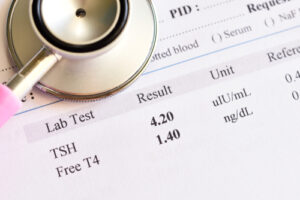
1. TSH (thyroid-stimulating hormone): This is a thyroid-related biomarker. As Thyroid Summit co-host and Thyroid Healthy author, this specific lab is one that’s close to my heart. I’ll tell you why.
Older limits let it climb to 5.5 mIU/L or higher, but modern debates peg the upper end at 2.5-4.0 mIU/L for better health vibes, especially if symptoms are whispering (or shouting). You’ll feel even better if it’s around 1.00. Simply put, if 95 out of 100 people are running on half-empty nutrient tanks, that becomes “normal.” But that’s not thriving is it? With a TSH in the 3s or 4s you’re treading water!
You can have a perfectly “normal” TSH and still feel awful. If free T3 is low, reverse T3 is elevated from chronic stress or inflammation, or key cofactors like selenium and iron are insufficient, thyroid signaling at the cellular level may be impaired. Standard population reference ranges also don’t account for deiodinase polymorphisms or chronic inflammatory states that can distort peripheral T4-to-T3 conversion.
I’ve written about this many times over the years because I continue to see it missed in conventional practice. If this resonates, you might also appreciate:
5 Signs of Thyroid Imbalance and How to Address Them Naturally
Take Thyroid Medicine? Don’t do These 5 Things
Improper Thyroid Testing Leads to Years of Misery

2. Ferritin: This is a biomarker measured to assess anemia. So let’s zoom in on ferritin, that sneaky storage form of iron I love harping on. Labs often flag it as normal from 10-150 ng/mL for women. But if you’re hovering at the low end, say 18, you’re not “fine” – you’re like a car sputtering on its last drop of gas. Hair may be falling out, thyroid levels low, and you may be dizzy or tired but some doctors will say everything’s okay because you’re in the “normal” range. 
Energy for chasing kids or crushing workouts? Forget about it. All of that requires your ferritin to be higher than 50, and closer to 70. That’s when your hair and energy levels are good. Did you know that people with thyroid issues (diagnosed or not) often feel foggy and experience tachycardia if they’re ferritin is under 60. I’ve counseled women with “normal” 18s who were losing hair and felt zapped. I was one of them in my 40’s.
I wrote this article to help you, Could Iron Deficiency Anemia Be Draining You? 8 Critical Tests to Know
And boosting the ferritin to 80 or more via iron-rich foods or dietary supplements (with doc oversight) turned them into energizer bunnies. Remember, low ferritin hampers T4-to-T3 conversion, that key thyroid hormone flip for metabolism and mood.
3. Cholesterol: When “Normal” Keeps Dropping
Over the past 30+ years, what counts as a “desirable” or treatment-target cholesterol level—especially LDL—has steadily trended lower in major guidelines.
Back in the 1980s, desirable total cholesterol was under 200 mg/dL with LDL goals around <130 mg/dL for many. By the 1990s and 2000s, high-risk folks were pushed toward an LDL less than 100 mg/dL, then optional <70 mg/dL for those who were considered “very high risk.”
Today’s guidelines often aim even lower for certain patients. While lab reference ranges themselves haven’t shifted as dramatically (many still list total <200 mg/dL as desirable), these evolving treatment thresholds mean more people hear “your cholesterol is high so let’s talk statins.”
These evolving targets that keep getting lowered have broadened who qualifies for statins, though some experts question whether pharmaceutical influence helped drive the bulk of the shift toward treating more of the population.
If you’re struggling with cholesterol concerns, consider reading this article next:
5 Surprising Ways Fig Fruit Extract Helps Glycemic Control and Cholesterol
 4. Serum Vitamin B12: Labs say 200 pg/mL is the floor, but neuropathy (tingles in your hands/toes), forgetfulness, or that “walking on clouds” feeling can creep in if you are below 400 pg/mL. Think of it as your brain’s Wi-Fi signal: At low-normal, it’s glitchy, leading to slower processing, slower decision-making processes, and white matter damage in older folks. I once had a friend whose wife was released from her nursing home after I raised her B12 levels… that’s because she started remembering things better and acting normally. If I didn’t catch that during my nursing home rounds she would have been admitted to the Alzheimer’s wing, that was their plan.
Just FYI: Elevated homocysteine or MMA often flags B12 deficiency way before anemia shows up – like your body’s smoke alarm blaring early. Standard serum ranges can miss up to 50% of subclinical cases, so people at 250 pg/mL get dismissed as “just stressed,” yet they’re foggy and wiped.
I’ve seen it countless times: A little methyl B12 (or my Mito B Complex with its balanced B-family squad—B1, B5, B9, etc.) clears the cobwebs fast without tipping the scales. Aim for serum levels of 400–700 pg/mL to keep your nerves sharp and energy steady. And don’t overlook gut health because probiotics support your microbiome’s own B12 production, making it a key player in absorption and utilization. For that matter, B12 and probiotics play a role in how you feel emotionally: How Your Gut Flora Contributes to Anxiety and 6 Corrective Steps
(Always team up with your doc and test those markers if symptoms linger—this isn’t one-size-fits-all advice!)
5. Vitamin D: Labs call 30 ng/mL “sufficient,” but for immune perks, bone strength, and mood lift, the Endocrine Society pushes 40-60 ng/mL (or at least >30). Below 20?
Trouble is a lot of times your vitamin D levels are not assessed properly. Probably most of the time it isn’t. Here’s how you SHOULD MEASURE your vitamin D levels properly.
Deficiency city, with risks like hyperparathyroidism and fractures. It’s your body’s natural anti-inflammatory superhero – low levels mimic fatigue or aches you’d blame on “aging.” 
But you can’t take it indiscriminately because mega-doses could push things out of balance, leading to hypercalcemia (too much calcium in the blood), which risks arrhythmias, kidney stones, nausea, confusion, and even kidney damage in severe cases. (Always get levels checked and work with your doctor because balance is key, not extremes!)
One Functional Medicine Lens (Mine Included)
In functional medicine, we don’t worship the range. We’re not chasing “perfect numbers” for their own sake. I discussed that many years ago in my book, Diabetes Without Drugs, where I talked about doctors making us “number junkies.”
Instead, we ask the real questions: What are your symptoms—all of them? What do you eat day in and day out? What supplements and meds are you taking? How does your body react to this food, that stress, or those pills? A thorough history and whole-body perspective often uncover the underlying drivers long before labs scream red flags.
Labs are tools to support what the clinical picture already suggests – not the other way around. We check for cofactors like zinc or selenium adequacy, inflammation skewing results, or meds mugging nutrients. We blend conventional labs with real-life context, aiming to optimize and prevent issues from snowballing.
It’s not about popping a pill for every glitch like TV commercials would have you think. It’s actually about terrain-building – like nourishing yourself with a smart diet, targeted supps, and lifestyle tweaks to allow your body to thrive, and not get in the way of itself. 
Why This Matters in 2026
“Your labs are normal” can essentially translate to “You’re average.”
But average today? It isn’t great. It could mean insulin resistance, low-grade inflammation, borderline hypothyroidism, marginal nutrients, possible anemia, stress and more. Not a gold medal. Not a body that functions optimally… more like one that gets by until you go to bed… and hopefully sleep! Yeah, sleep is major to your health. Don’t compromise it with an addiction to a screen. Nothing is happening online that is more important than your sleep.
You deserve optimal in terms of labs, and the “normal” reference range isn’t. You deserve the level where hair shines, moods stabilize, and energy flows on a daily basis. You’re the CEO of your health. Keep questioning, keep optimizing, keep learning about your body. You’ve got this! If this topic interests you, read how to ORDER your own bloodwork and other labs – to get results faster. You then share them with your doctor, but things move faster when you have your results in hand.




Suzy Cohen, RPh, has been a licensed pharmacist for over 30 years, blending conventional medicine with natural approaches to help people feel better and live healthier. She is the founder of Script Essentials, a supplement company known for targeted, custom-formulated products, some with patented innovations.
With a special focus on thyroid health, functional medicine, and drug-induced nutrient depletion (what she calls “drug muggers”), Suzy is the author of several books including Thyroid Healthy, Drug Muggers, and Diabetes Without Drugs. She also writes a nationally syndicated health column and shares practical, easy-to-understand guidance with readers around the world.