If you’re taking an SSRI antidepressant and your sex life has gone sideways, you are not broken. You are not “old.” You are not imagining it.
It is most likely your medication.
It’s a little cruel, honestly. You take a medication hoping to feel more alive again:
Good news: I’m less anxious!
Bad news: I now have the romantic enthusiasm of a houseplant.
Sound familiar? SSRI Sexual side effects are among the most common – and least discussed – problems with SSRIs, the popular antidepressants that include fluoxetine, sertraline, escitalopram, paroxetine, citalopram, and others. In the United States, about 13% of adults reported taking an antidepressant in the past 30 days during 2015 to 2018. That’s A LOT of people quietly wondering, “What happened to me?”
But it’s on the patient package insert, you probably didn’t see it. Tiny print, big problem.
The Numbers Are Hard to Ignore
Studies estimate that SSRI sexual side effects impact roughly 25% to 73% of users, depending on the drug, dose, study design, and whether patients are directly asked about it. Paroxetine (Paxil) tends to be one of the bigger offenders.
In the early years, these concerns were probably under-recognized because many patients were embarrassed to report them — and many doctors simply weren’t asking.
If you want to read more on this topic, here’s a paper entitled, Incidence of sexual dysfunction associated with antidepressant agents.
Here’s the part that matters… people usually don’t volunteer this information. They may feel embarrassed, ashamed, or worried their doctor will dismiss them. They may not realize there’s a connection to their medication. So unless the practitioner asks directly, the problem can sit there quietly for months or years.
The Biggest Bedroom Buzzkills
These drugs are definite culprits when it comes to SSRI sexual side effects. And the actual breakdown from one famous multicenter study was approximately like this:
- Paroxetine: 70.7%
- Citalopram: 72.7%
- Sertraline: 62.9%
- Fluoxetine: 57.7%
- Venlafaxine: 67.3%
But that’s not the entire list. Many antidepressants from different categories (other than SSRIs) can impact your intimacy. I created a list for you.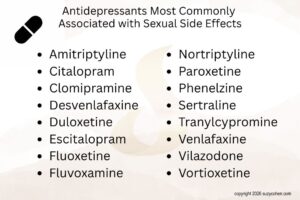
Here are the antidepressants most commonly associated with SSRI sexual side effects:
- Amitriptyline
- Citalopram
- Clomipramine
- Desvenlafaxine
- Duloxetine
- Escitalopram
- Fluoxetine
- Fluvoxamine
- Nortriptyline
- Paroxetine
- Phenelzine
- Sertraline
- Tranylcypromine
- Venlafaxine
- Vilazodone
- Vortioxetine
 SSRI Sexual Side Effects Vary from Person to Person
This side effect is not just “low libido.” It can show up all kinds of ways:
- Reduced desire
- Difficulty becoming aroused
- Vaginal dryness or reduced lubrication
- Delayed, weak, or absent orgasm
- Erectile difficulties
- Delayed ejaculation
- Less sensation or pleasure
- Emotional blunting around intimacy
SSRIs increase serotonin signaling, which is potentially very helpful for certain kinds of depression, mood instabilities and anxiety. But like any good thing (except chocolate), too much is bad, right?! So, this meeans higher levels of serotonin then dampen dopamine (relative to serotonin), and interfere with arousal and orgasm pathways. That’s why the same drug that helps someone feel emotionally steadier may also make them feel sexually muted. Serotonin have to stay in a certain balance and ratio with one another. You can’t tilt the see-saw too much.
IMPORTANT: One other thing and I will one day write a whole article for you but lower or muted dopamine will also cause or worsen depression. That lends explanation to why some people take an SSRI (even high doses), and still feel depressed and/or suicidal.
The Part People Whisper About: PSSD
There is also a condition called post-SSRI sexual dysfunction, or PSSD. This refers to sexual symptoms that persist after stopping an SSRI or related antidepressant. So you go off it thinking life will get back to normal, and it doesn’t.
Commonly described symptoms include genital numbness, weak or pleasureless orgasm, loss of libido, erectile dysfunction, and sometimes emotional blunting. The exact frequency is still unknown, but the condition is well documented in the medical literature.
I am not telling you this to scare you away from antidepressant medication that may be helping you. I’m telling you because informed patients make better decisions, and also some people who take these drugs don’t even realize there is a sexual blunting side effect.
Point is, if your sexual function changed for the worse, and it started after beginning an antidepressant, bring it up early.
Just an Interesting Clinical Observation…
Sometimes the “sexual dysfunction” isn’t purely sexual.
SSRI sexual side effects are actually more about emotional flattening – making a person not interested in sex, and not anticipating it or thinking about it. It’s because it mutes dopamine, so you’ll hear people say, “I still love my partner. I just don’t feel the spark.” That distinction matters because it changes the conversation from “relationship problem” to “medication physiology.”
Things that Help and Things that Don’t
1. Exercise
This is probably the most underrated one, and it’s free!
Exercise boosts dopamine, nitric oxide, circulation, testosterone sensitivity, mood, and body confidence all at once. Even brisk walking helps. Resistance training may help libido more than you realize. I’ve heard people improve simply from:
- walking daily
- lifting weights 2–3x/week
- improving sleep
- reducing alcohol
It’s not glamorous or easy, but sometimes it’s very effective because it quickly raises dopamine.
2. Address Nutrient Deficiencies
A few deficiencies can quietly worsen SSRI sexual side effects, so if you take an SSRI and you’re also running low any of these, it’s going to be more severe for you:
- zinc
- magnesium
- vitamin D – Read this ARTICLE next if you take D
- low iron/ferritin – Here are the top 5 REASONS for iron deficiency
- low B12
- low folate – I bet you didn’t know Folate Predicts Your Personality and Brain Power
SSRIs themselves may indirectly worsen motivation, energy, and dopamine tone in susceptible people, so correcting deficiencies can matter more than you might think. 
3. Slow It Down
It’s not sexy advice, but clinically important. SSRIs can dull response speed. Some people do better when intimacy becomes less goal-oriented and less rushed.
More touch.
Less performance pressure.
Longer warm-up.
That sounds “psychological,” but there’s real neurochemistry behind it.
4. Time Your Meds Properly
Some people notice less sexual blunting if they:
- take the SSRI after intimacy instead of before
- shift dosing from morning to evening (or vice versa) it’s an experiment of sorts
This depends on the drug and half-life. Paxil® and Zoloft® behave differently than Prozac® which is very long-acting. When it comes to SSRI sexual side effects, timing makes a difference as does the medicine you take.
5. Avoid Testosterone boosters
Many supplements labeled as “testosterone boosters” hyped on the internet are a hard no! Some are so stimulatory they cause terrible jitters. Some worsen insomnia. Others cause blood pressure spikes, irritability , PANIC ATTACKS, anxiety or tachycardia.
They’re usually not your friend. Many times I’ve seen the ingredient list look okay on the bottle, but then the company gets caught up in legal problems because the supplement ingredients are tainted with steroids or hormones (to make it work better for the customer), and that’s dangerous.
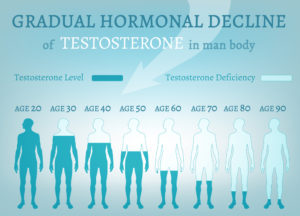
That said, testosterone does decline in both men and women over time as you can see in my graphic, but the best way to restore that (and YES it could help with libido), is with bioidentical testosterone injections… or even cream or patches. But shots (often self-injected) are ideal because it’s absorbed better. If you’re uncertain what your “T” levels are, you can take a blood test and/or DUTCH Compete Test.
6. Natural Herbal Options
This is the part where the pharmacist in me perks up. None of these are Viagra-in-a-capsule. They’re here for your consideration because I like to be complete:
- Saffron has surprisingly good early research for SSRI sexual side effects. In women taking fluoxetine, a randomized double-blind placebo-controlled trial found that saffron improved arousal, lubrication, erectile function, orgasm quality, and pain scores. Saffron itself has some mood-boosting benefits. We also know that in a separate trial saffron helped fluoxetine-related erectile dysfunction.And before you get any ideas, yes, I also put saffron in Vision Script — but for eye health, not romance. Research on saffron and retinal support is actually pretty fascinating.* Read this article next, 7 Key Strategies to Combat Blurry Vision: A Comprehensive Guide.
- Maca root also has some supportive data. It’s earthy, food-like, and generally well-tolerated. A pilot dose-finding study and a later placebo-controlled trial suggest maca may help antidepressant-induced sexual dysfunction, particularly libido and arousal, though the studies were small and more research is needed. Typical doses studied were around 1.5 – 3 grams (total) daily, and it takes about 2 months to even see if it’s going to help.
- Ginkgo biloba is more mixed. Older open-label research looked promising, but controlled trials have been less consistent. It may help some people through blood-flow effects (getting blood down to the nether regions), but it is not a slam dunk in terms of boosting libido. Also, ginkgo can interact with blood thinners like warfarin and others, increasing bleeding risk, so this one deserves caution. It’s last on the list but worthy of honorable mention.
What Else Can Help?
Since the actual drug is the cause of the SSRI sexual side effects, it makes sense that you may just want to remove that piece! But please do not stop your antidepressant suddenly. That can cause dangerous withdrawal symptoms and relapse. Tapering SLOWLY is better and if you decide to do that, it’s a conversation to have with your prescriber. 
Options may include lowering your daily dose, switching medications (ie from paroxetine to bupropion), or changing the timing of drug, which may or may not help. I don’t think it would have a huge impact, but it’s worth a try. Timing your medicine is critical to reducing unwanted side effects: Chronotherapy: Timing of These 7 Medication Matters Greatly!
Some doctors also discuss short “drug holidays,” but this depends on the medication. It is not appropriate for every SSRI, and it should never be done casually. When you suddenly stop these drugs, your receptors have down-regulated, which makes sudden discontinuation dangerous. Benzodiazepines (like alprazolam and clonazepam) are not much different in terms of downregulating receptors, read Benzodiazepines: Dangers and Lies.
One Last Thing
Your mental health matters. Your sex life matters too.
These are not competing priorities. They are both part of being a whole, healthy human being.
So if this side effect is happening to you, please say something. Not next year. Not after your relationship is strained. Not after you’ve convinced yourself this is just “how things are now.” There are options, and yes, your doctor has heard this before. Many times! They’ve heard it in medical Continuing Ed programs, from the drug reps promoting the meds, and from other patients.
You are allowed to want your mood back and your body back.
Related Articles
Sex Headaches YES, YES – Oh Noooo!
Perimenopause Brain Fog Isn’t “Just Hormones”
7 Annoying Reasons You’re Burping Too Much (And How to Fix It!)
Unraveling the Mystery: 5 Psychosomatic Disorders vs. Hard-to-Diagnose Illnesses
The Truth About Confabulation: 10 Causes of ‘Honest Lying’ and Its Social Impacts

Suzy Cohen, RPh, has been a licensed pharmacist for over 30 years, blending conventional medicine with natural approaches to help people feel better and live healthier. She is the founder of Script Essentials, a supplement company known for targeted, custom-formulated products, some with patented innovations.
With a special focus on thyroid health, functional medicine, and drug-induced nutrient depletion (what she calls “drug muggers”), Suzy is the author of several books including Thyroid Healthy, Drug Muggers, and Diabetes Without Drugs. She also writes a nationally syndicated health column and shares practical, easy-to-understand guidance with readers around the world.